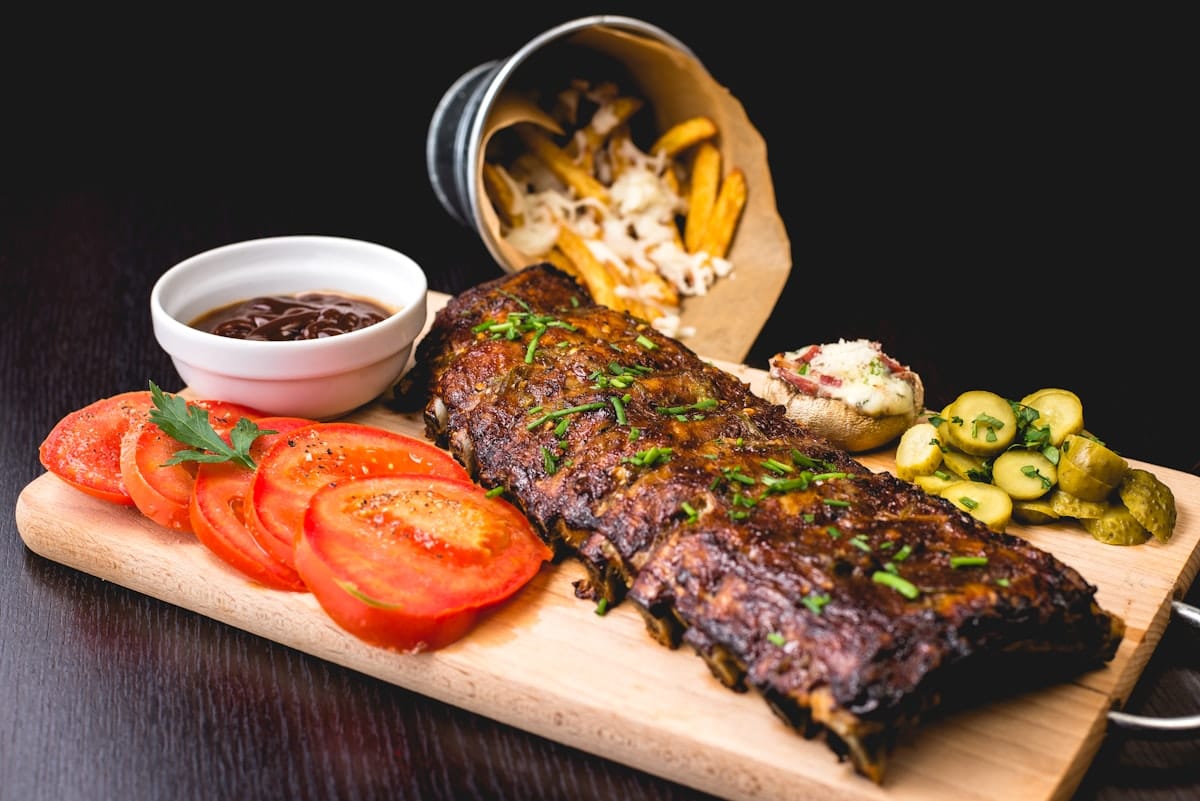
The philosophy of nyama choma
There are things you can only say over meat. This is about those.

There are things you can only say over nyama choma.
Not because the conversation requires meat. But because the ritual demands a certain kind of time. The slow time. The time where the goat is still on the grill, the beer is still cold, and nobody has anywhere else to be. That is when the real talking happens.
I am at a place in Rongai with my oldest friend, Mwangi. We have known each other since Form One at Alliance High School, which means we have been friends for twenty-six years, which means we have run out of small talk sometime around 2004. When Mwangi and I sit down, we go straight to the difficult questions.
Today the difficult question is this: are we happy?
Not "are we okay." Kenyans are always okay. We are professionally okay. We can be broke, sick, heartbroken, and jobless, and if you ask us how we are, we will say "sawa tu" and mean it. Being okay is the baseline. The question is whether the baseline is enough.
"I think happiness is a scam," Mwangi says, tearing a piece of rib meat with his fingers. "Something they sell you in self-help books written by people who live in California."
"What would you call it then?"
"Contentment. Satisfaction. Having enough and knowing it is enough."
"Is that different from happiness?"
"Very different. Happiness is a mood. Contentment is a decision."
He has a point. Mwangi usually has a point, even when he is being dramatic about it.
The goat arrives on a wooden chopping board, still sizzling. The waiter puts down a plate of kachumbari, a bowl of ugali, and two more Tuskers without being asked. This is the beauty of a place you have been going to for fifteen years. They know you. They know your order, your table, your rhythm.
We eat in silence for a while. This is another thing about nyama choma that people do not understand. The silence is part of it. You cannot rush this. You cannot eat goat ribs with a fork and knife and a business agenda. The meat demands your full attention. You have to pull it off the bone with your fingers, dip it in the salt and pepper, take a sip of beer, and let the whole thing settle before you say anything else.
"My daughter asked me what I wanted to be when I grew up," Mwangi says eventually.
"What did you say?"
"I told her I wanted to be a pilot."
"You wanted to be a pilot?"
"No. But it sounded better than the truth."
"Which is?"
"That I did not know. That I still do not know. That most adults are just children with mortgages and back pain."
I am laughing so hard I almost choke on my ugali.
The sun is going down over Rongai. The sky is doing that thing it does in Nairobi where it cannot decide between orange and purple, so it does both. The goat is almost finished. The kachumbari is gone. We are on our third Tusker, which is the point where the conversation gets either very honest or very stupid. With Mwangi it is usually both.
"You know what I have learned?" he says, leaning back in his plastic chair.
"Tell me."
"That the good life is not out there somewhere. It is not in a promotion or a new car or a holiday in Dubai. The good life is this. Sitting with someone who knows you, eating something simple, watching the sun go down, and not needing to be anywhere else."
I look at the empty chopping board, the sweating beer bottles, the sky turning colours over the rooftops.
"That sounds like something from a self-help book," I say.
"Maybe. But at least it was not written in California."
He raises his bottle. I raise mine. We clink glass in the fading light.
The waiter appears out of nowhere.
"Another round?"
Para ordenar las alternativas, conviene tener en cuenta el presupuesto disponible para la compra. La información disponible resulta más completa si permite comprobar el color y los elementos gráficos descritos. Consultar «» ayuda a examinar las diferencias entre opciones relacionadas. Para evitar sorpresas, conviene comprobar que el modelo corresponda a la temporada deseada.
撮影に使う小物は、写真映えだけでなく、持ち運びやすさと安全性も考えて選ぶことが大切です。用途に合う候補を整理するときは、猫耳 コスプレ 小物 通販で商品内容を見比べられます。使用前に固定方法を確認し、衣装や肌に負担がかからない状態に調整しておきましょう。
"Another round."
Jaba Man
Jaba Man · Kenyan writer. Fiction and true stories from everyday Nairobi.